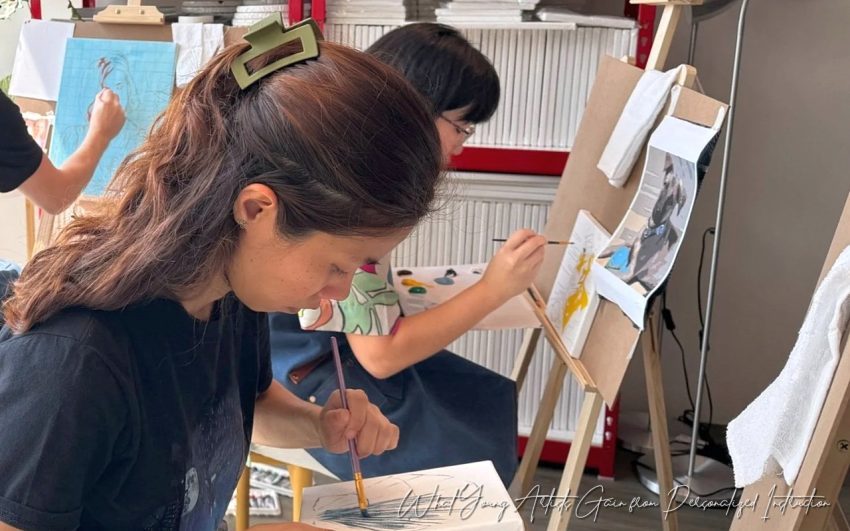
Self-directed art practice has a certain romance to it. The image of the lone painter in a studio, working purely from intuition, sounds compelling, and for a small number of highly self-aware people it even works. But for most beginners, that picture is misleading. Without some form of structured feedback, students tend to repeat the same habits, struggle to identify their own weaknesses, and plateau well before their potential. They’re not lazy or untalented; they’re just missing information they can’t generate on their own. Personalized instruction fills that gap. It gives developing artists a mirror they can’t hold up for themselves.
This is particularly visible in the early stages of learning, when technical gaps are hardest to self-diagnose. A student who holds a pencil too tightly will reinforce that tension for years if no one intervenes. One who draws from symbol rather than observation will keep producing flat, generic shapes even as their confidence grows. What a knowledgeable instructor sees in thirty seconds can take an unsupported student months to notice, if they notice it at all. That asymmetry is what makes guided learning so valuable when someone is serious about developing their skills.
The Feedback Loop That Changes Everything
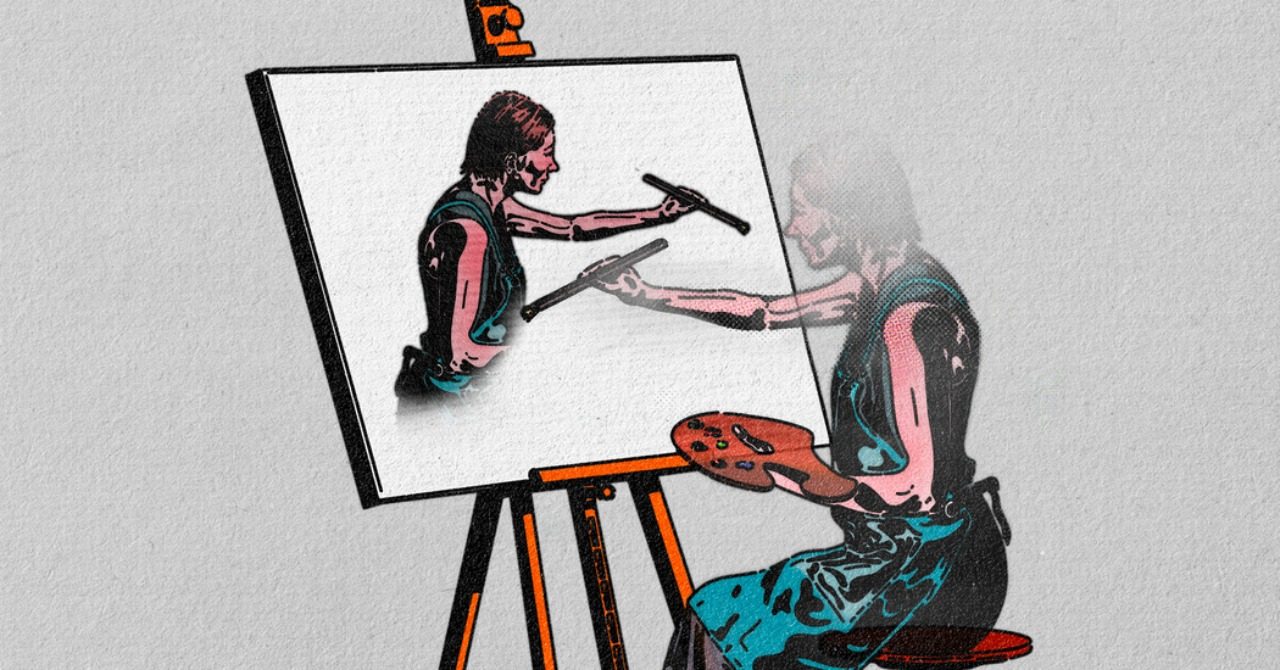
Most creative fields involve some form of mentorship, but visual art is one where the difference between guided and unguided practice shows up fast. The reason is that drawing, painting, and composition all involve perceptual habits, ways of seeing that are either trained or left to drift. Understanding the role of a tutor in this context means understanding how consistent, specific feedback reshapes those habits over time.
The best instructors don’t just correct errors. They point to why the error exists. A student drawing a face that looks “off” is usually dealing with a measurement problem, not a talent problem. The difference between “that doesn’t look right” and “your eyes are too high on the head by about a third” is the difference between vague discouragement and a concrete fix. Good instruction closes the gap between a student’s intention and their result.
There’s also a motivational dimension. Students who receive regular, specific feedback tend to put in more hours, because they can see their progress. Self-directed learners often hit a wall and stop, unsure whether to push through or try something different. A skilled instructor removes that ambiguity and keeps the student moving forward rather than circling the same problems.
Technical Skills No Tutorial Can Fully Replace
Online art tutorials have expanded dramatically in recent years and they’re genuinely useful for specific techniques: blending approaches, color theory basics, or learning particular software tools. But there are skills a prerecorded tutorial simply can’t develop: measuring accurately from a live subject, understanding how light falls on three-dimensional forms in real space, or correcting grip and posture in real time.
According to the National Endowment for the Arts, students in arts education demonstrate higher engagement and stronger critical thinking skills, and that research tends to apply most strongly to structured, teacher-directed learning rather than self-directed exposure through screens.
The other limitation of passive tutorials is that they don’t know you. A good instructor tracks what a specific student struggles with across multiple sessions and builds a progression that addresses those gaps directly. That’s a fundamentally different educational experience from watching a stranger paint on a screen and trying to extract what applies to your specific problems.
Building Creative Confidence Through Structure
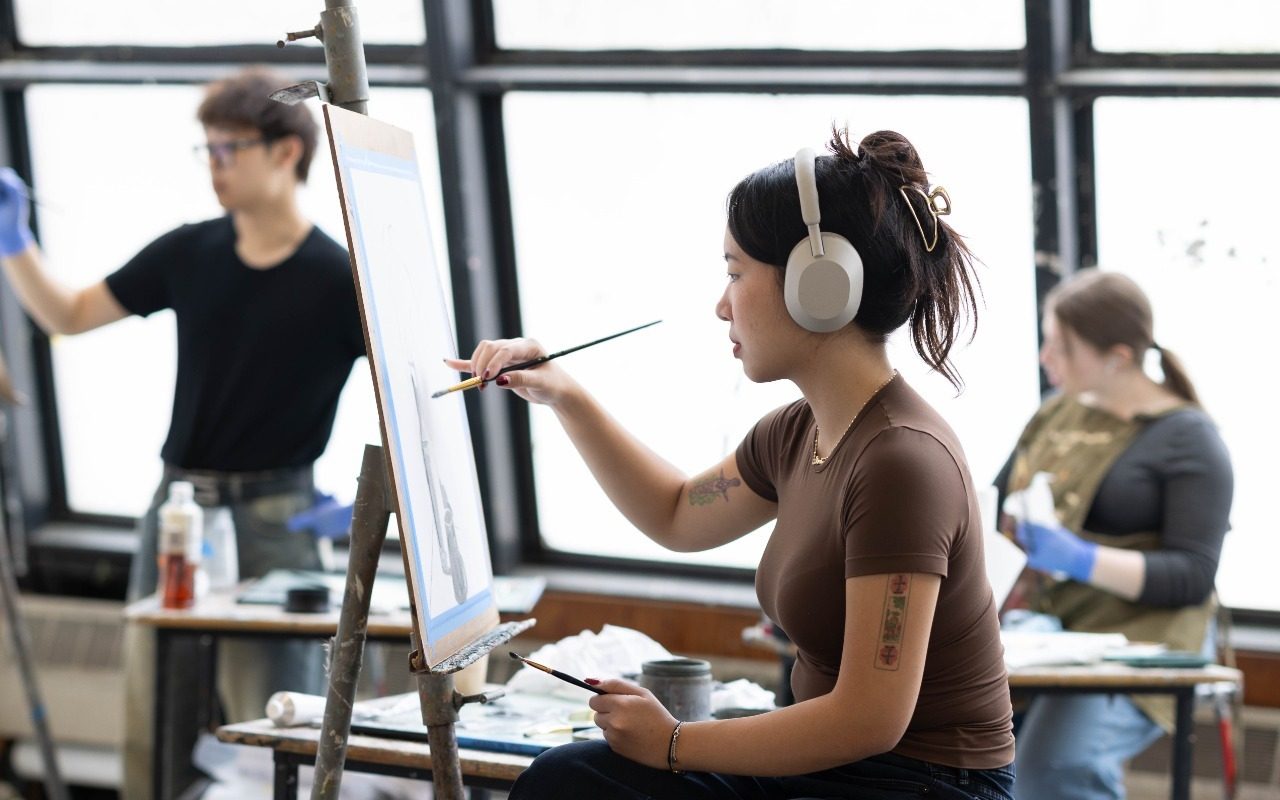
There’s a common assumption that structure and creativity are opposed, that too much instruction produces technically competent but artistically timid work. In practice, the opposite tends to be true. Students with solid technical foundations take more creative risks, because they trust their tools. They’re not afraid to try a complex composition because they know how to fix proportion errors when they arise.
Confidence in art is largely a product of competence. Students who feel uncertain about their technical abilities stay safe, sticking to simple subjects, familiar compositions, and limited color palettes. They avoid detailed faces because they know the proportions might go wrong. Students who have been taught to handle those challenges become more willing to push into unfamiliar territory, because they have something to fall back on when things don’t go as planned.
This mirrors findings in other creative disciplines. Trained musicians improvise with more sophistication than untrained ones, because technical grammar gives them a richer vocabulary to work with. Drawing and painting are no different: knowing the rules doesn’t cage the artist, it tells them where the edge is. The one who understands foreshortening can distort it deliberately for effect; the one who doesn’t just makes mistakes.
Observation as a Teachable Skill
One of the most durable gifts a formal art education can offer is the ability to see differently. Representational drawing is, at its core, a perceptual discipline. It requires the student to suppress their symbolic understanding of objects and actually look at what’s in front of them. This doesn’t come naturally to most people, because the brain is designed to categorize efficiently, not to perceive with fidelity.
Drawing teachers have developed specific exercises to break this habit: drawing from upside-down reference images, negative space exercises, extended contour drawing. None of these are intuitive, and most students won’t develop them independently. Once internalized, though, they change how a student sees everything, not just their sketchbook.
The National Institutes of Health has documented connections between visual arts practice and improved spatial reasoning and sustained attention, which helps explain why observational drawing tends to produce benefits that reach well beyond the canvas.
When to Start and What to Expect
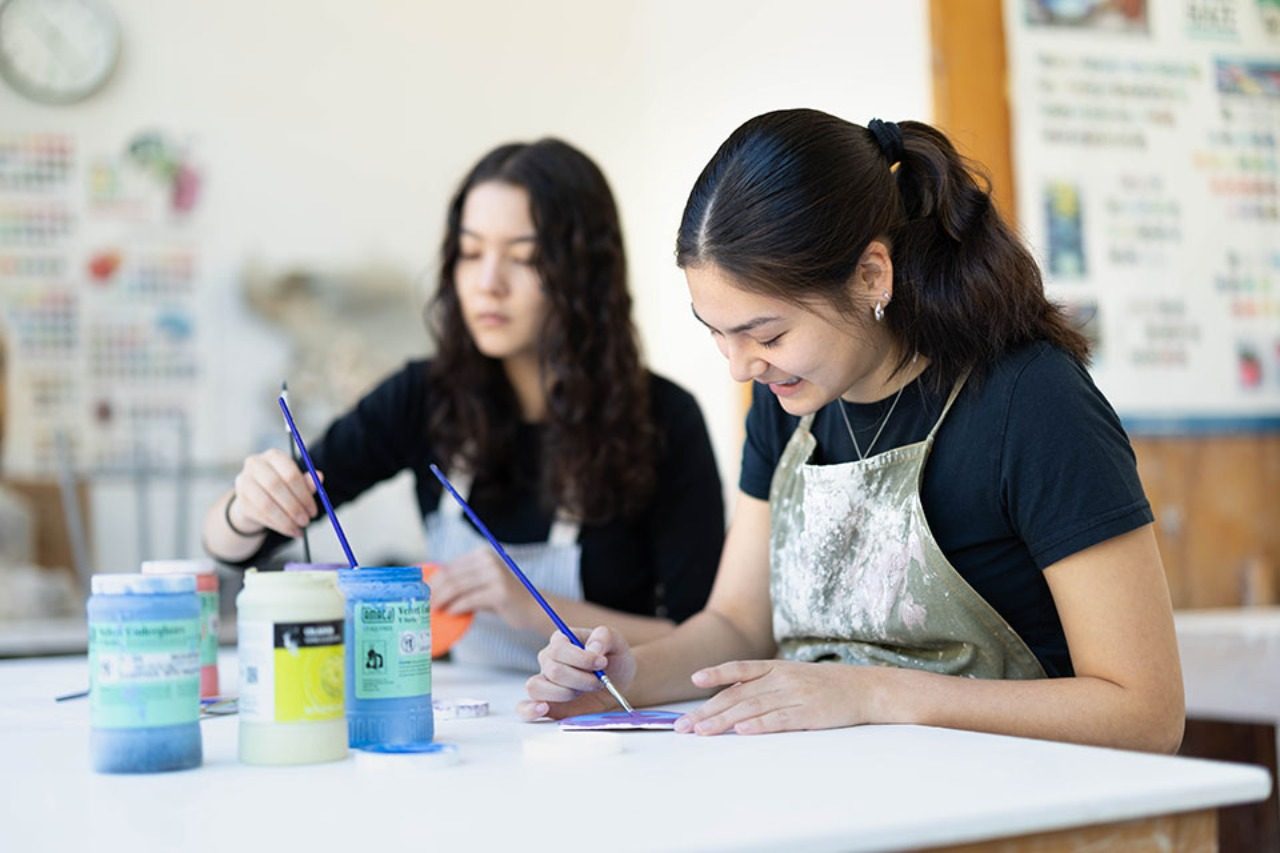
The window for high-leverage art instruction is wider than most people assume. There’s no equivalent of the critical period that exists for language acquisition. Adults who take up drawing or painting seriously can make dramatic improvements, sometimes faster than children, because their capacity for deliberate practice is more developed.
That said, early instruction does offer one specific advantage: it establishes habits before bad ones solidify. A teenager who has spent five years drawing without guidance will have accumulated errors that need unlearning before new skills can build on top. Starting with structured instruction, even informally, saves significant time later.
For parents and students deciding when to seek out guidance, the most practical answer is whenever the interest becomes serious enough to justify deliberate practice. Casual interest doesn’t require a formal course. But if a student is putting in regular hours and genuinely wants to improve, some form of directed feedback will accelerate that progress faster than most alternatives.